
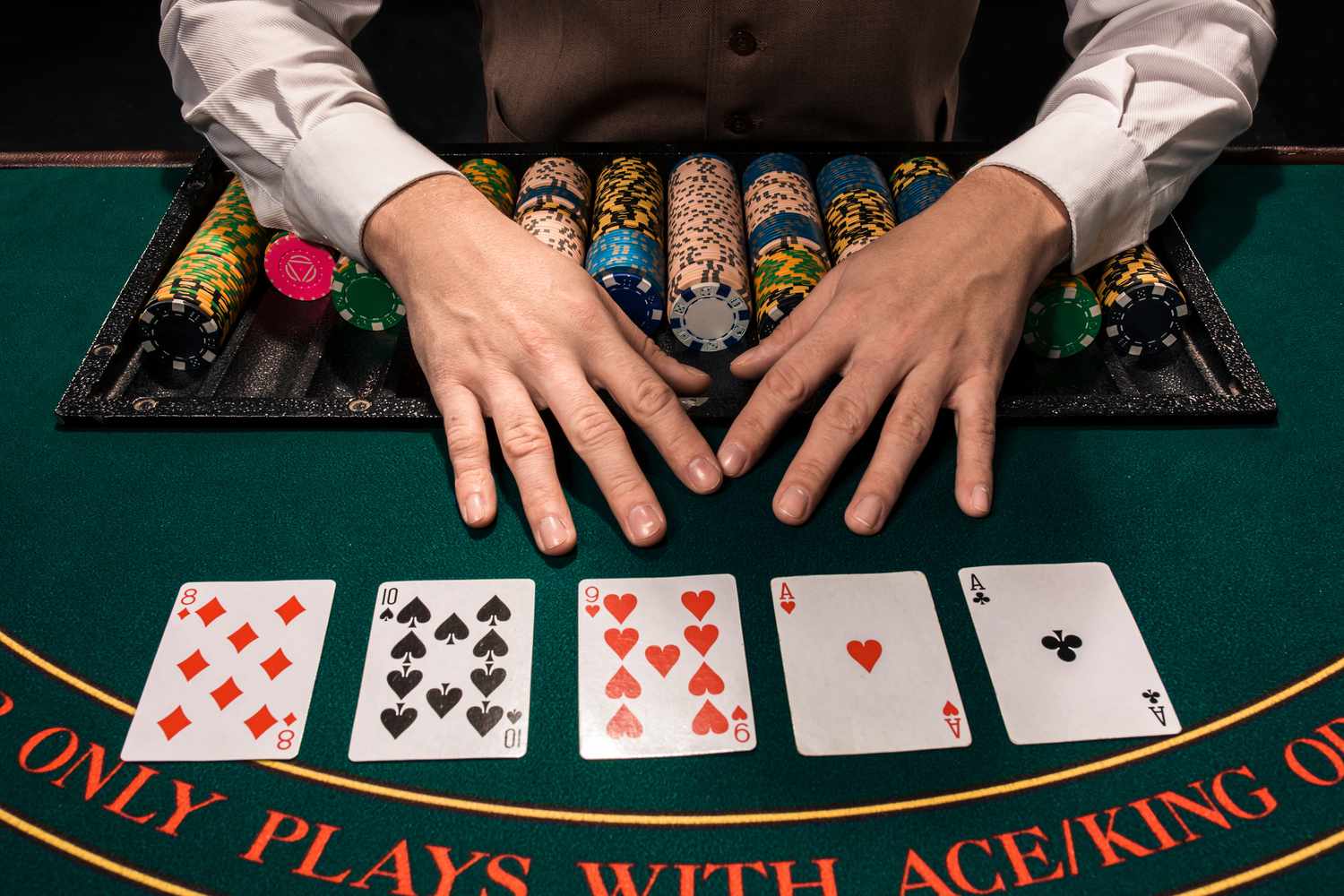
Poker is one of the most famous card games in the world, combining strategy, probability, psychology, and an element of chance. It can be played casually among friends, at traditional casinos, in dedicated poker rooms, and through online platforms. Professional tournaments have also helped transform poker into an internationally recognized competitive game.
Unlike many casino games where players compete primarily against the house, traditional poker usually involves competition between players. The objective is not simply to receive strong cards. Successful players must decide when to bet, raise, call, fold, and sometimes bluff based on limited information.
Read More: https://mag.betforward.com/casino/poker/
Texas Hold’em is currently the best-known variation, but it is only one member of a much larger poker family. Omaha, Seven-Card Stud, Five-Card Draw, and other formats each provide a different experience.
This guide explains how poker works, the standard poker hand rankings, the rules of Texas Hold’em, popular poker variations, important strategic concepts, common beginner mistakes, online poker, tournaments, and responsible play.
What Is Poker?
Poker is a family of card games in which participants wager according to the strength or potential strength of their hands.
The exact rules vary between formats, but most poker games include several fundamental elements:
- Playing cards
- Betting rounds
- A pot
- Hand rankings
- Strategic decisions
- A showdown when necessary
The pot consists of the chips or money wagered during a hand.
Players compete to win this pot.
Interestingly, having the best cards is not always necessary.
A player can also win by making every opponent fold before the cards are revealed.
This feature creates much of poker’s strategic depth.
How Do You Win in Poker?
There are generally two ways to win a poker hand.
The first is reaching the showdown with the strongest qualifying hand.
The second is betting or raising in a way that causes every remaining opponent to fold.
Consider a simple example.
Player A may hold a relatively weak hand but make a convincing large bet. If Player B believes they are beaten and folds a stronger hand, Player A wins the pot without showing the cards.
This possibility makes poker fundamentally different from games where the result depends only on the final cards.
Poker Hand Rankings
Before learning poker strategy, every player needs to understand the standard hand rankings.
The following hands are listed from strongest to weakest.
Royal Flush
A Royal Flush consists of:
Ace, King, Queen, Jack, and Ten of the same suit.
For example:
A♠ K♠ Q♠ J♠ 10♠
It is the highest standard poker hand.
Straight Flush
A Straight Flush contains five consecutive cards of the same suit.
For example:
9♥ 8♥ 7♥ 6♥ 5♥
Four of a Kind
Four cards of the same rank form Four of a Kind.
For example:
K♠ K♥ K♦ K♣ 7♠
Full House
A Full House combines Three of a Kind with a Pair.
For example:
Q♠ Q♥ Q♦ 8♣ 8♥
Flush
A Flush consists of five cards belonging to the same suit without needing to be consecutive.
For example:
A♦ J♦ 8♦ 5♦ 2♦
Straight
A Straight consists of five cards in consecutive rank order.
For example:
9♣ 8♦ 7♠ 6♥ 5♣
The suits do not need to match.
Three of a Kind
Three cards of the same rank create Three of a Kind.
For example:
7♠ 7♥ 7♦ K♣ 4♥
Two Pair
Two Pair consists of two separate pairs.
For example:
J♠ J♦ 5♣ 5♥ A♠
One Pair
One Pair contains two cards of the same rank.
For example:
10♠ 10♥ A♦ 8♣ 3♠
High Card
If no player has any of the combinations above, the highest relevant cards determine the hand’s strength.
Texas Hold’em Poker
Texas Hold’em is the most widely recognized poker variation.
Each player receives two private cards known as hole cards.
Five community cards are eventually placed face up in the center of the table.
Every player can use these community cards.
The objective is to create the strongest possible five-card hand from the seven cards available: two private cards and five community cards.
Importantly, players do not have to use both private cards. Their best five-card hand can use two, one, or even none of them.
The Dealer Button and Blinds
Texas Hold’em uses a dealer button to represent the dealer position.
The button moves clockwise after each hand.
Two players generally place forced bets before the cards are dealt.
These are known as:
- Small Blind
- Big Blind
The blinds ensure that there is already something in the pot before voluntary betting begins.
Without forced bets, players could theoretically wait indefinitely for premium cards.
The Pre-Flop
Every player receives two private cards.
The first betting round is called the pre-flop.
Players evaluate their starting hands and decide whether to:
- Fold
- Call
- Raise
Starting hand selection is extremely important.
Strong players usually fold a significant percentage of their starting hands rather than entering every pot.
The Flop
After the first betting round, three community cards are dealt face up.
These cards are called the flop.
Suppose a player holds:
A♠ K♠
and the flop is:
A♥ 9♠ 4♣
The player now has a pair of Aces.
Another betting round begins after the flop.
The Turn
A fourth community card is dealt after the flop betting round.
This card is called the turn.
The turn can dramatically change the strength of different hands.
It may:
- Complete a straight
- Complete a flush
- Create Two Pair
- Improve Three of a Kind
- Change which player is likely ahead
Another betting round follows.
The River
The fifth and final community card is known as the river.
No additional community cards will be dealt after the river.
Players therefore have all available card information when making their final betting decisions.
The Showdown
If two or more players remain after the final betting round, the game reaches the showdown.
Players reveal their cards, and the strongest five-card poker hand wins the pot.
If two players have hands of exactly equal value, the pot is normally divided between them.
Basic Poker Actions
Players need to understand several common actions.
Check
Checking means remaining in the hand without placing an additional bet.
A player can normally check only when there is no outstanding wager to call.
Bet
A player places the first wager during a betting round.
Call
Calling means matching the current wager.
Raise
Raising means increasing the current bet.
Other players must then match the new amount if they want to continue.
Fold
Folding means giving up the current hand.
Any chips already committed to the pot remain there.
All-In
Going all-in means wagering all remaining chips.
Why Position Matters in Poker
Position is one of the most important strategic concepts in poker.
A player who acts later gets to observe what other players do first.
Imagine two players holding identical cards.
One must make a decision without knowing whether opponents intend to bet.
The other acts last and has already watched everyone else check, bet, or fold.
The second player has more information.
This informational advantage makes late position extremely valuable.
The Dealer Button
The dealer button is generally considered the strongest position in Texas Hold’em because the player on the button acts late after the flop.
From this position, players can often make decisions with more information than their opponents.
This means some hands that would normally be folded from early position can sometimes be played from the button.
Starting Hand Selection
One of the biggest differences between beginners and disciplined poker players is the number of hands they choose to play.
Premium starting hands include combinations such as:
- AA
- KK
- JJ
- AK
However, the correct decision depends on more than the cards themselves.
Players should also consider:
- Position
- Previous raises
- Number of opponents
- Stack sizes
- Opponent tendencies
There is no single list of hands that should always be played in every situation.
Suited and Offsuit Hands
When two cards belong to the same suit, they are described as suited.
For example:
A♣ J♣
When the suits are different, the hand is offsuit.
For example:
A♣ J♦
Suited cards have additional potential because they can contribute to a flush.
However, simply being suited does not automatically make a weak hand worth playing.
Pocket Pairs
When both private cards have the same rank, the player has a pocket pair.
Examples include:
- AA
- 88
- 22
Large pocket pairs can be extremely strong before the flop.
Smaller pairs may have value because they can improve to Three of a Kind when the community cards are dealt.
Understanding Poker Outs
An “out” is a card that may improve a player’s hand to one they believe can win.
Suppose a player has four cards of the same suit after the turn.
Additional cards of that suit may complete a flush.
Counting possible outs helps players estimate their chance of improving.
However, not every apparent out necessarily produces the winning hand because an opponent may still hold something stronger.
Pot Odds
Pot odds compare the amount a player must call with the size of the pot they could potentially win.
Suppose the pot contains $100 and an opponent bets $20.
The player must decide whether paying another $20 is justified by the potential reward and the probability of winning.
Pot odds allow poker players to approach decisions mathematically instead of relying entirely on intuition.
Expected Value
Expected Value, commonly abbreviated as EV, is one of the most important concepts in advanced poker.
A positive-EV decision is expected to produce value over many repetitions of the same situation.
This does not mean it will win every time.
A player can make the mathematically correct decision and still lose the hand.
For example, going all-in while significantly ahead can still result in a loss if an opponent receives one of the few cards needed to improve.
Poker strategy is therefore focused on the quality of decisions rather than judging every decision by its immediate outcome.
Bluffing in Poker
Bluffing is one of poker’s most famous strategic elements.
A bluff occurs when a player with a weak hand bets or raises in an attempt to make a stronger hand fold.
Good bluffing is not random aggression.
Players should consider:
- Opponent tendencies
- Board texture
- Position
- Previous betting action
- Bet size
- Number of opponents
A bluff must generally tell a believable story.
Semi-Bluffing
A semi-bluff is different from a pure bluff.
The player may not currently have the best hand but still has a reasonable chance of improving.
For example, a player with a strong flush draw may bet aggressively.
They can potentially win in two ways:
- The opponent folds immediately.
- The player completes the flush later.
This makes semi-bluffing an important strategic concept.
Value Betting
Not every bet is designed to make opponents fold.
Value betting is used when a player believes they have a stronger hand and wants a weaker hand to call.
Suppose a player has a strong Two Pair on the river.
If they believe an opponent with One Pair may call a reasonable bet, betting can generate additional value.
Learning how much to bet is an important poker skill.
Reading Opponents
Poker players often attempt to identify patterns in their opponents’ behavior.
Useful observations may include:
- How frequently they enter pots
- How often they raise
- Their typical bet sizes
- Whether they bluff frequently
- Whether they call too often
- How they respond to aggression
In online poker, players primarily rely on betting behavior and timing.
In live poker, physical behavior may provide additional information, although so-called tells should never be treated as perfect evidence.
Tight and Loose Players
A tight player participates in relatively few starting hands.
A loose player enters more pots.
Neither description tells us whether the player is good or bad.
It simply describes starting-hand frequency.
These categories are often combined with aggressive or passive behavior.
For example, a player might be:
- Tight-aggressive
- Tight-passive
- Loose-aggressive
- Loose-passive
Recognizing these tendencies can help players adapt.
Poker Variance
Variance explains why short-term poker results can differ dramatically from long-term expectations.
Imagine a player has a very strong probability of winning when the money goes into the pot.
They can still lose.
If this happens several times in a short period, the player may experience a significant losing session despite making reasonable decisions.
Understanding variance is important because players who judge themselves only by short-term results can become frustrated and make emotional mistakes.
What Is Tilt?
Tilt occurs when emotion begins influencing poker decisions.
It may be triggered by:
- A large loss
- An unlucky river card
- Repeated losing hands
- An opponent’s behavior
- Fatigue
A player on tilt may start playing too many hands or making unnecessarily large bets.
Recognizing this emotional state and stopping the session can be more valuable than continuing to play poorly.
Cash Games
Cash games are traditional poker tables where chips have a direct monetary value.
Players usually buy in for a certain amount and can leave according to the table rules.
Blinds normally remain constant.
Cash games allow players to focus on individual hands without the increasing blind pressure found in tournaments.
Poker Tournaments
Tournament poker works differently.
Players pay an entry fee and receive a starting stack of tournament chips.
Blinds increase over time.
When a player loses all their chips, they are usually eliminated unless the tournament structure allows re-entry or rebuys.
The event continues until one player has accumulated all the chips.
Prize money is generally distributed among a percentage of the highest-finishing participants.
Tournament Strategy
Tournament strategy changes as the event progresses.
Players must consider:
- Increasing blinds
- Stack size
- Opponent stack sizes
- Number of remaining players
- Prize structure
- Tournament stage
A strategy that works early in a tournament may not be appropriate near the final table.
Adaptability is essential.
Omaha Poker
Omaha is another popular poker variation.
Players typically receive four private cards instead of two.
However, they must use exactly:
- Two private cards
- Three community cards
to form their final five-card hand.
This rule creates many possible combinations and often produces stronger hands than Texas Hold’em.
Seven-Card Stud
Seven-Card Stud was especially popular before Texas Hold’em became dominant.
There are no community cards.
Players receive their own combination of face-up and face-down cards.
The best five-card combination ultimately determines the winner.
Stud requires players to remember which visible cards have already appeared.
Five-Card Draw
Five-Card Draw is one of the easiest poker formats for beginners to understand.
Each player receives five private cards.
Players can usually discard selected cards and receive replacements.
A betting round follows, and the best hand at showdown wins.
This format is commonly associated with casual home poker games.
Online Poker
Online poker allows players to participate through computers, smartphones, and tablets.
Platforms may offer:
- Cash games
- Sit-and-go tournaments
- Multi-table tournaments
- Fast-fold poker
- Freerolls
Online play can be much faster than traditional live poker because cards are dealt automatically and chips are calculated by software.
Live Poker vs Online Poker
Live and online poker use the same fundamental strategy, but the experiences differ.
Online poker generally provides:
- Faster hands
- More table options
- Automated calculations
- Detailed hand histories
Live poker provides:
- Face-to-face interaction
- Physical chips and cards
- A slower pace
- More observable player behavior
Some players specialize in one format, while others enjoy both.
Common Beginner Poker Mistakes
New players frequently make similar errors.
Playing Too Many Hands
Beginners often become bored and enter pots with weak starting cards.
Patience is an important part of poker.
Ignoring Position
The same hand can have very different value depending on where a player is seated.
Calling Too Often
Calling may feel safer than raising or folding, but repeatedly calling without a clear reason can be expensive.
Bluffing Too Much
Poker is famous for bluffing, but beginners sometimes assume they need to bluff constantly.
They do not.
Chasing Losses
Increasing stakes simply to recover previous losses can lead to poor decisions.
Focusing Only on Their Own Cards
Strong poker players think about the possible range of hands their opponents may hold.
Bankroll Management
Bankroll management is essential because even skilled players can experience losing periods.
Useful principles include:
- Keep poker funds separate from essential expenses.
- Choose appropriate stakes.
- Avoid moving to higher stakes emotionally.
- Accept that losing sessions happen.
- Set clear financial limits.
Good bankroll management does not guarantee profit, but it can prevent normal variance from creating unnecessary financial pressure.
Responsible Poker Play
Poker contains skill, but it also involves financial risk and uncertainty.
It should never be treated as guaranteed income.
Responsible players should:
- Set spending limits.
- Set time limits.
- Avoid borrowed money.
- Take breaks.
- Avoid playing emotionally.
- Never chase losses.
A player should be comfortable with the possibility of losing the entire amount allocated to a session.
Frequently Asked Questions
What is the most popular poker game?
Texas Hold’em is currently the most widely recognized and commonly played poker variation.
What is the strongest poker hand?
A Royal Flush is the strongest standard poker hand.
Is poker a game of skill or luck?
Poker contains both. Individual hands can be strongly influenced by chance, while strategic decisions become increasingly important over large numbers of hands.
Do I need to bluff to play poker?
No. Bluffing is useful in appropriate situations, but constantly bluffing is unnecessary and often unprofitable.
What does all-in mean?
Going all-in means committing all remaining chips to the current hand.
What is the best starting hand in Texas Hold’em?
Pocket Aces is the strongest starting hand before the flop.
Can good poker players still lose?
Yes. Variance means a player can make a strong mathematical decision and still lose an individual hand or session.
Is online poker different from live poker?
The fundamental rules are similar, but online games generally move faster and provide less physical information about opponents.
Conclusion
Poker has remained one of the world’s most popular card games because it combines uncertainty with meaningful decision-making. The cards matter, but they are only one part of the game.
Players must understand hand rankings, position, betting, probability, opponent tendencies, and risk. As they become more experienced, concepts such as pot odds, expected value, ranges, value betting, bluffing, and variance become increasingly important.
Texas Hold’em may be the most recognizable form of poker today, but Omaha, Seven-Card Stud, Five-Card Draw, cash games, tournaments, live tables, and online poker all offer different challenges.
Perhaps the most important lesson is that winning an individual hand and making a good decision are not always the same thing. A mathematically strong decision can lose because chance remains part of poker.
For this reason, successful poker is built around long-term decision quality, patience, discipline, and emotional control. Combined with responsible bankroll management and realistic expectations, these principles provide a strong foundation for understanding one of the most strategic and enduring card games in the world.